

 English
  日本語
日本語  français
  Deutsch
  Español
  русский
  português
  العربية
  tiếng việt
  ไทย
ไทย  Polska
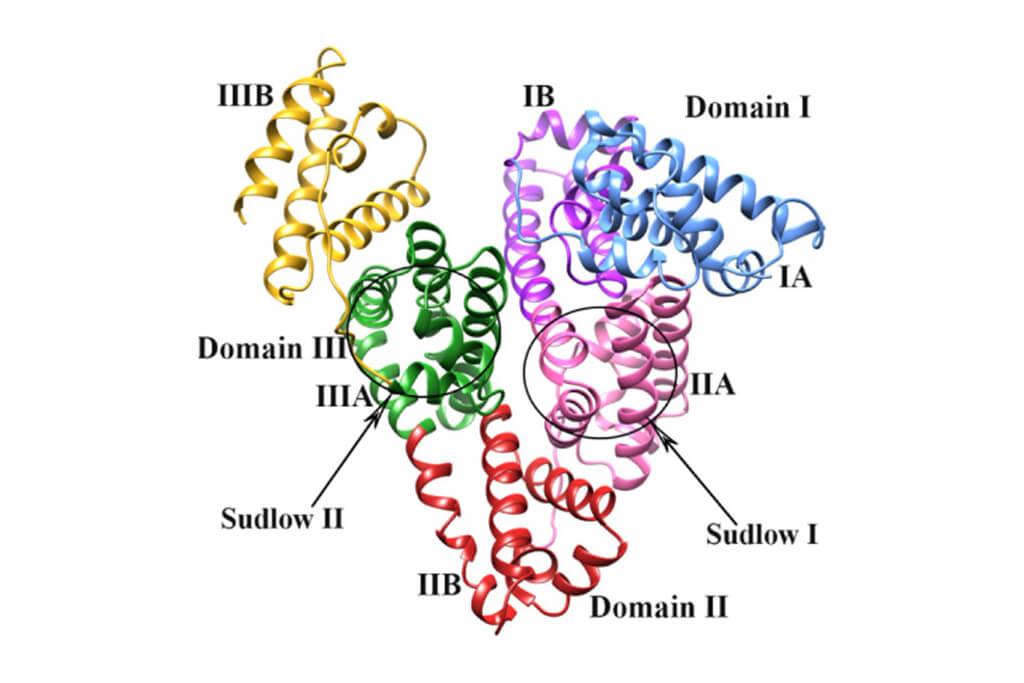
| Property | Value |
|---|---|
| Molecular Weight | 66–69 kDa |
| Shape | Ellipsoid |
| Effective Diameter | ~3.5–4 nm |
| Net Charge | Negative (at physiological pH) |
| Solubility | High |
Can Albumin Pass Through the Kidney Filtration Membrane?
In healthy kidneys, the glomerular filtration barrier acts as a highly selective filter. It allows water, ions, and small molecules to pass freely while largely retaining larger proteins like albumin. This barrier consists of three layers: the fenestrated endothelium, the glomerular basement membrane (GBM), and the podocyte slit diaphragm.Glomerular Endothelium
The first layer features fenestrations (pores) of 50–100 nm, which permit most plasma components to reach the basement membrane. However, the glycocalyx layer provides an initial charge-selective barrier.Basement Membrane
The GBM provides both size and charge selectivity. Its dense network of collagen IV, laminin, and negatively charged heparan sulfate repels negatively charged albumin molecules.Podocyte Slit Diaphragm
The final and finest barrier consists of slit diaphragms between podocyte foot processes, with effective pore sizes around 3.5–4 nm. This layer is critical for restricting albumin passage.| Parameter | Value |
|---|---|
| Albumin Molecular Weight | 69 kDa |
| Albumin Sieving Coefficient (Normal) | ~0.0006 |
| Daily Albumin Filtered | ~3 g/day |
| Daily Urinary Loss (Normal) | <30 mg/day |
How Membrane Pore Size Affects Albumin Filtration
In synthetic membrane systems, pore size is the dominant factor determining albumin transmission or retention. Membranes are engineered with specific pore distributions to achieve desired separation performance.| Membrane Type | Typical Pore Size | Albumin Passage |
|---|---|---|
| Microfiltration (MF) | 0.1–10 μm | Passes Easily |
| Ultrafiltration (UF) | 0.01–0.1 μm (MWCO 1–500 kDa) | Usually Retained |
| Nanofiltration (NF) | 1–10 nm | Strongly Retained |
| Reverse Osmosis (RO) | <1 nm | Completely Rejected |
Can Albumin Pass Through Ultrafiltration Membranes?
Ultrafiltration membranes are widely used in bioprocessing and wastewater treatment. Their performance with albumin depends heavily on the specified MWCO.UF Membranes with 10 kDa MWCO
These tight membranes provide excellent retention of albumin, typically exceeding 99%. They are commonly used for protein concentration and purification in pharmaceutical manufacturing.UF Membranes with 50 kDa MWCO
Most albumin is still retained (>95%), though some transmission may occur depending on operating conditions and membrane material (e.g., PES, PVDF, or regenerated cellulose).UF Membranes with 100 kDa MWCO
Partial passage becomes more likely. These are sometimes used when selective transmission of smaller proteins while retaining albumin is desired.| UF MWCO | Albumin Retention |
|---|---|
| 10 kDa | >99% |
| 30 kDa | >95% |
| 50 kDa | High (typically 90-98%) |
| 100 kDa | Partial (variable) |
Albumin Separation in Industrial Water and Wastewater Treatment
In industrial contexts, effective albumin and protein removal is essential for meeting discharge standards and enabling water reuse.Pharmaceutical Wastewater
Processes involving vaccine production, blood products, and biotechnology generate wastewater rich in proteins. UF and MBR systems effectively retain these macromolecules while allowing biological treatment of smaller organics.Hospital Wastewater
Hospital effluents often contain blood residues, proteins, pathogens, pharmaceuticals, and organic matter where sodium dichloroisocyanurate sdic is widely used. Combining ultrafiltration with membrane bioreactors (MBR) provides robust pretreatment and advanced treatment, significantly reducing biological and chemical risks before disinfection.Food and Beverage Industry
Dairy wastewater is particularly rich in proteins including albumin-like molecules. Membrane systems enable both pollutant removal and valuable protein recovery for reuse or by-product generation.Which Membrane Technology Is Best for Removing Albumin?
| Technology | Albumin Removal | Typical Application |
|---|---|---|
| Microfiltration (MF) | Low | Pretreatment, suspended solids removal |
| Ultrafiltration (UF) | High | Protein separation, bioprocessing, wastewater polishing |
| Nanofiltration (NF) | Very High | Water reuse, partial desalination |
| Reverse Osmosis (RO) | Near Complete | High purity water production |
Common Challenges in Albumin Filtration
Membrane Fouling
Protein fouling, particularly by albumin, is one of the most common operational challenges. Albumin can adsorb onto membrane surfaces, form gels, or contribute to biofouling layers, leading to reduced flux and increased transmembrane pressure. Effective strategies include pretreatment, optimized hydrodynamics (air scouring or cross-flow), and periodic chemical cleaning.Flux Decline
Over time, protein accumulation causes gradual decline in permeate flux. Regular monitoring and maintenance protocols are essential to sustain long-term performance.Cleaning Requirements
Common cleaning agents include sodium hypochlorite for organic removal, peracetic acid, and alkaline cleaners. Specialized water treatment chemicals can significantly enhance cleaning efficiency and extend membrane lifespan while controlling biofouling.Frequently Asked Questions
Does albumin pass through ultrafiltration membranes?
Usually no. Most commercial UF membranes with MWCO below 50-100 kDa effectively retain albumin. Retention rates often exceed 95% under proper operating conditions.Can albumin pass through microfiltration membranes?
Yes. MF membranes have much larger pores (0.1–10 μm) compared to albumin’s size, allowing easy passage while removing larger particulates and bacteria.Why is albumin retained by UF membranes?
Albumin’s molecular weight (69 kDa) and hydrodynamic size exceed the pore characteristics of most UF membranes. Size exclusion, combined with electrostatic repulsion, ensures high retention.Which membrane removes albumin best?
Reverse osmosis provides near-complete rejection, followed by nanofiltration and tight ultrafiltration membranes. The choice depends on treatment goals and economics.Can albumin cause membrane fouling?
Yes. As a major protein foulant, albumin significantly contributes to irreversible fouling in many membrane systems, especially in bioprocessing and hospital wastewater applications.Enrosun Solutions for Membrane-Based Water Treatment and Disinfection
Established in 2002, Chengdu Rosun Disinfection Pharmaceutical Co., Ltd. (Enrosun) has become a trusted leader in wastewater treatment technologies, environmental disinfection, hospital infection control, and integrated environmental engineering services. With over 20 years of expertise and more than 160 intellectual property rights, Enrosun delivers reliable solutions to clients worldwide.Our Product Categories
Water Treatment Equipment: Advanced ultrafiltration systems, integrated wastewater treatment plants, hospital sewage treatment stations, water reuse systems, and MBR membrane manufacturers providing high-quality membrane bioreactor (MBR) solutions. Water Treatment Disinfectants: Specialized formulations for effluent disinfection, membrane cleaning, biofouling control, and reclaimed water treatment. Animal Disinfectants: Effective products for livestock and poultry biosecurity. Environment and Surface Cleaning: Professional disinfectants for hospitals, public facilities, and industrial sites. Personal Care Products: Hygiene solutions supporting healthcare environments.Why Choose Enrosun?
20+ years of specialized water treatment experience
ISO9001 and ISO14001 certified
Proven expertise in hospital and high-protein wastewater treatment
Integrated equipment, chemicals, and engineering services
Successful exports to over 30 countries
Tailored solutions for municipal, industrial, and healthcare projects