Your recent searches
Your recent searches will appear here


Filtration through a membrane is primarily driven by a pressure difference across the membrane. Depending on the specific filtration process, additional driving forces may include concentration gradients, osmotic pressure differences, electrical potential, and even gravity in certain low-pressure systems. In water and wastewater treatment applications, transmembrane pressure (TMP) serves as the dominant force controlling permeate production, separation efficiency, and overall system performance in technologies like microfiltration (MF), ultrafiltration (UF), nanofiltration (NF), and reverse osmosis (RO). Understanding these driving forces is essential for designing efficient treatment systems, optimizing energy consumption, and achieving high-quality effluent suitable for discharge or reuse. This comprehensive guide explores the science behind membrane filtration and its practical applications in modern water treatment.
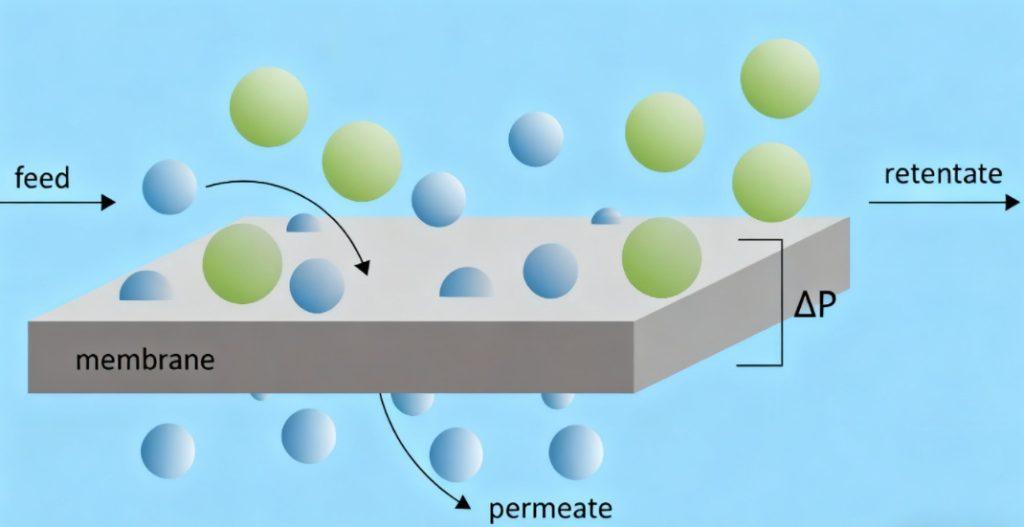
Membrane filtration is a physical separation process, widely applied in MBR membrane, MBR filtration, and MBR sewage treatment. It uses a semi-permeable barrier to separate components in a fluid mixture. At its essence, it allows desirable substances — typically water molecules — to pass through while retaining unwanted contaminants such as suspended solids, colloids, bacteria, viruses, proteins, and dissolved salts. This selective transport makes membrane technology one of the most versatile and effective tools in modern water treatment.
A membrane is a thin, selective barrier made from materials like polymeric (PVDF, PES, polyamide), ceramic, or composite substances. It features precisely controlled pore sizes or molecular weight cut-offs (MWCO) that determine what can pass through. Unlike traditional depth filters that trap particles within their structure, membranes primarily work through surface filtration or solution-diffusion mechanisms, offering consistent and predictable performance when properly maintained.
Effective filtration is critical across numerous sectors. In municipal drinking water production, it removes pathogens and particulates to ensure safety. Industrial facilities use it to treat process water and wastewater, while hospitals rely on advanced membrane systems to handle complex effluents containing pathogens, pharmaceuticals, and organic matter. Additional applications include water reuse projects, food and beverage processing, pharmaceutical manufacturing, and desalination. By producing high-quality permeate, membrane filtration supports environmental protection, resource recovery, and regulatory compliance.
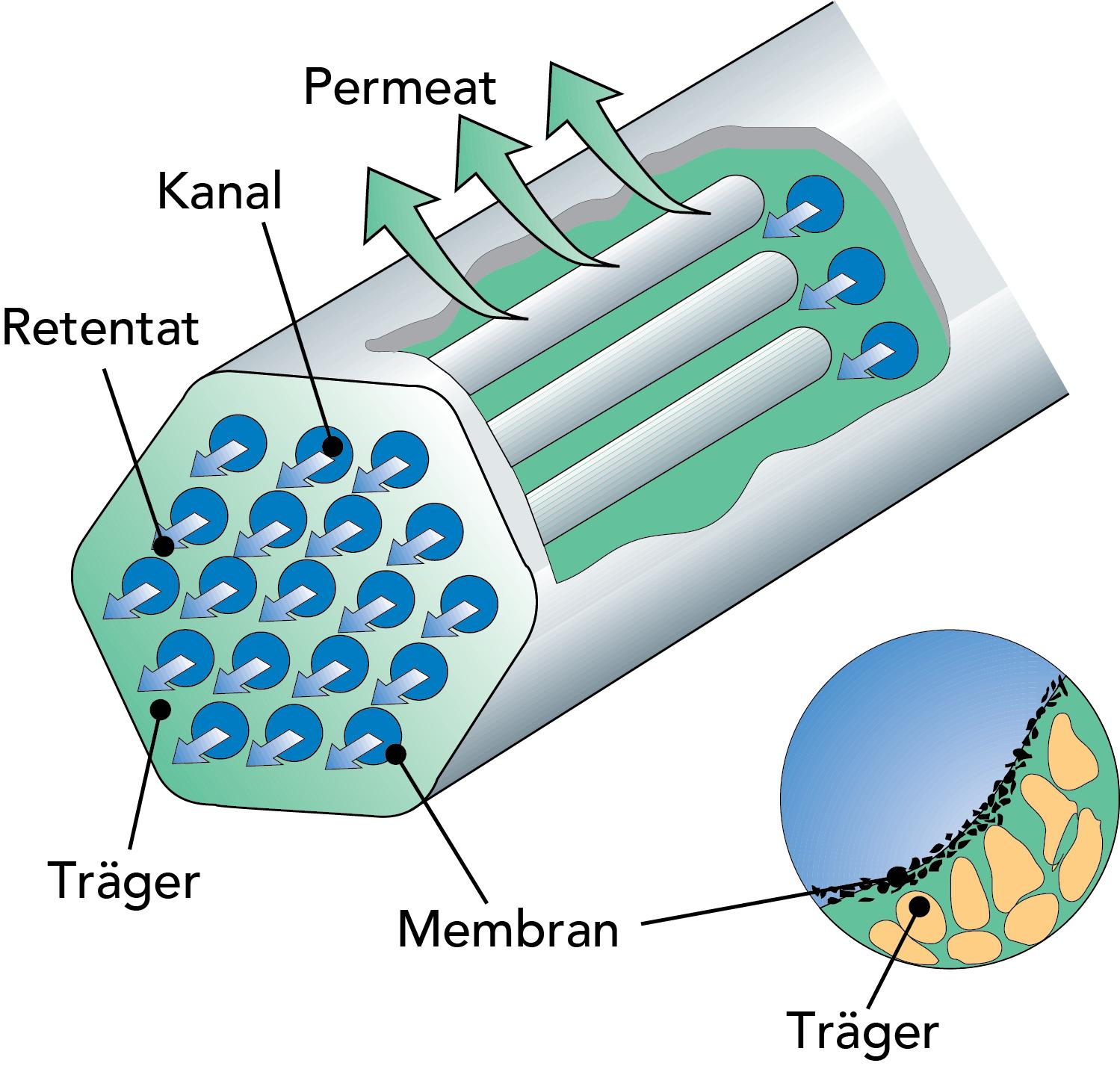
Several fundamental forces govern how substances move across membranes. While pressure is the primary driver in most water treatment applications, understanding the interplay of different forces helps engineers optimize system design and operation.
Applied pressure is the dominant force in pressure-driven membrane processes. It overcomes natural resistance and forces solvent (usually water) through the membrane pores while retaining solutes. The effective pressure is quantified as Transmembrane Pressure (TMP), calculated as: TMP = [(Feed Pressure + Concentrate Pressure)/2] − Permeate Pressure This force is essential for MF, UF, NF, and RO systems. Higher pressure generally increases flux but can also accelerate fouling if not carefully managed.
According to Fick's law of diffusion, particles naturally move from areas of high concentration to low concentration. This passive driving force is key in dialysis and some diffusion-based systems, though it plays a supporting role in most pressure-driven water treatment applications.
Osmotic pressure arises from concentration differences across the membrane. In natural osmosis, water moves toward the higher solute concentration side. Reverse osmosis (RO) applies external pressure exceeding the osmotic pressure to reverse this flow, enabling desalination and high-purity water production.
Electrodialysis and electro-membrane processes use electrical fields to drive ion movement through charged membranes, making them effective for selective ion removal and certain industrial separations.
| Driving Force | Typical Technology | Primary Application |
|---|---|---|
| Pressure Difference | UF, NF, RO, MF | Water & wastewater treatment |
| Concentration Gradient | Diffusion / Dialysis | Medical & specific separations |
| Osmotic Pressure | RO | Desalination & concentration |
| Electrical Potential | Electrodialysis | Ion removal |
Transmembrane Pressure (TMP) represents the net pressure difference driving fluid through the membrane. It is the most critical operational parameter monitored in membrane systems. Proper TMP management ensures stable flux while minimizing energy use and fouling. Factors influencing TMP include feed pressure, permeate side pressure (often near atmospheric), and increasing resistance due to fouling. Operators aim to maintain TMP within an optimal range for consistent performance.
| TMP Level | Performance Impact |
|---|---|
| Too Low | Insufficient permeate flux |
| Optimal Range | Stable filtration and energy efficiency |
| Too High | Accelerated fouling and potential membrane damage |
Different membrane technologies leverage driving forces according to their pore size and separation goals.
MF operates at low pressures (0.1–2 bar) and primarily removes suspended solids, bacteria, and larger particulates. It serves as an excellent pretreatment step for more advanced processes.
UF uses moderate pressure (1–5 bar) to remove colloids, viruses, proteins, and macromolecules. It is widely applied in wastewater polishing and as a barrier in MBR systems.
NF requires higher pressure (5–20 bar) and effectively removes organic matter and multivalent ions while allowing some monovalent salts to pass, making it suitable for softening and partial desalination.
RO demands the highest pressures (10–80 bar) to overcome osmotic pressure and reject dissolved salts, heavy metals, and micropollutants, producing near-pure water.
| Technology | Pressure Range | Main Purpose |
|---|---|---|
| MF | 0.1–2 bar | Suspended solids & bacteria removal |
| UF | 1–5 bar | Macromolecules, viruses & colloids |
| NF | 5–20 bar | Organics & multivalent ions |
| RO | 10–80 bar | Desalination & high purity |
Smaller pores deliver higher rejection rates but reduce permeate flux. Engineers must balance selectivity with productivity based on project requirements.
High turbidity, organic load, or oil content can rapidly foul membranes. Proper pretreatment is crucial for long-term performance.
Higher temperatures generally increase membrane permeability and flux due to reduced viscosity, though they may also affect fouling rates and material stability.
Fouling — including biofouling, organic fouling, and inorganic scaling — is the most significant factor reducing performance over time. It increases hydraulic resistance and requires regular cleaning.
Membrane systems enable advanced treatment and water reclamation, supporting nutrient removal and producing effluent suitable for environmental discharge or reuse.
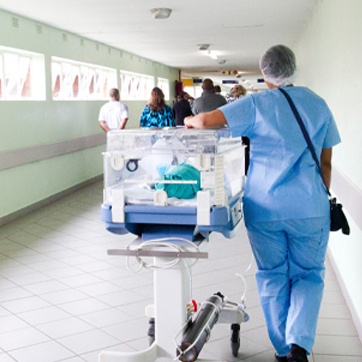
Hospital effluents contain complex contaminants including pathogens, viruses, antibiotic residues, blood components, and pharmaceuticals. Membrane filtration, particularly UF combined with MBR technology, provides a robust physical barrier. When paired with effective disinfection solutions, it ensures high biosafety standards and regulatory compliance before safe discharge or reuse.
Industries such as pharmaceutical, food processing, chemical manufacturing, and textile production generate challenging waste streams. Membrane technologies allow targeted removal of specific pollutants and facilitate water recycling.
Membrane filtration supports circular water management by producing high-quality reclaimed water for cooling towers, irrigation, boiler feed, and industrial processes.
Organic matter, proteins, and biofilms are primary culprits. Effective pretreatment, optimized operation, and regular chemical cleaning are essential countermeasures.
Precipitation of calcium, magnesium, silica, and other inorganics can block pores. Antiscalants and proper pH control help mitigate this issue.
Membranes typically last 3–10 years depending on operating conditions and maintenance quality. Material selection and cleaning practices significantly influence lifespan.
NF and RO systems are particularly energy-intensive. Advances in low-pressure membranes and energy recovery devices continue to improve overall efficiency.
The primary driving force is the pressure difference across the membrane (transmembrane pressure). Other forces like concentration gradients and electrical potential play roles in specific processes.
TMP is the net pressure difference that drives liquid through the membrane. It is a key control parameter for flux and system performance.
In some low-pressure or gravity-fed systems it can contribute, but most industrial and municipal membrane installations rely on applied mechanical pressure.
Membrane fouling increases resistance to flow, gradually reducing permeate flux unless addressed through cleaning and maintenance.
Reverse osmosis (RO) typically operates at the highest pressures due to the need to overcome osmotic pressure for salt rejection.
The global industry depends heavily on China water treatment chemicals supply chains to support large-scale membrane system operations.
Established in 2002, Chengdu Rosun Disinfection Pharmaceutical Co., Ltd. (Enrosun) has emerged as a leading provider of wastewater treatment technologies, environmental disinfection solutions, and hospital infection control systems. With more than 20 years of hands-on experience and over 160 intellectual property rights, Enrosun offers integrated solutions that combine advanced equipment with specialized chemicals and engineering expertise.
Water Treatment Equipment: Including UF systems, integrated wastewater treatment units, hospital sewage treatment systems, membrane bioreactors (MBR), and water reuse solutions. Water Treatment Disinfectants: Formulations for effluent disinfection, biofouling control, membrane cleaning, and reclaimed water treatment. Animal Disinfectants: Products supporting poultry farms, livestock facilities, and veterinary sanitation. Environment and Object Surface Cleaning: Professional disinfectants for hospitals, public facilities, and industrial environments. Personal Care Products: Hygiene solutions for healthcare and personal protection.
20+ years of specialized experience in water treatment
ISO9001 and ISO14001 certified operations
160+ intellectual property rights
Deep expertise in hospital wastewater treatment
Integrated equipment, chemicals, and engineering services
Successful exports to more than 30 countries
Looking for high-performance membrane filtration solutions? Whether you are planning a hospital wastewater treatment project, upgrading industrial water recycling systems, or implementing UF, MBR, NF, or RO technologies, Enrosun delivers customized equipment, effective chemicals, and comprehensive engineering support to meet your specific needs. Contact Enrosun today to discuss your membrane filtration challenges and receive a tailored technical proposal.
 English
  日本語
日本語  français
  Deutsch
  Español
  русский
  português
  العربية
  tiếng việt
  ไทย
ไทย  Polska